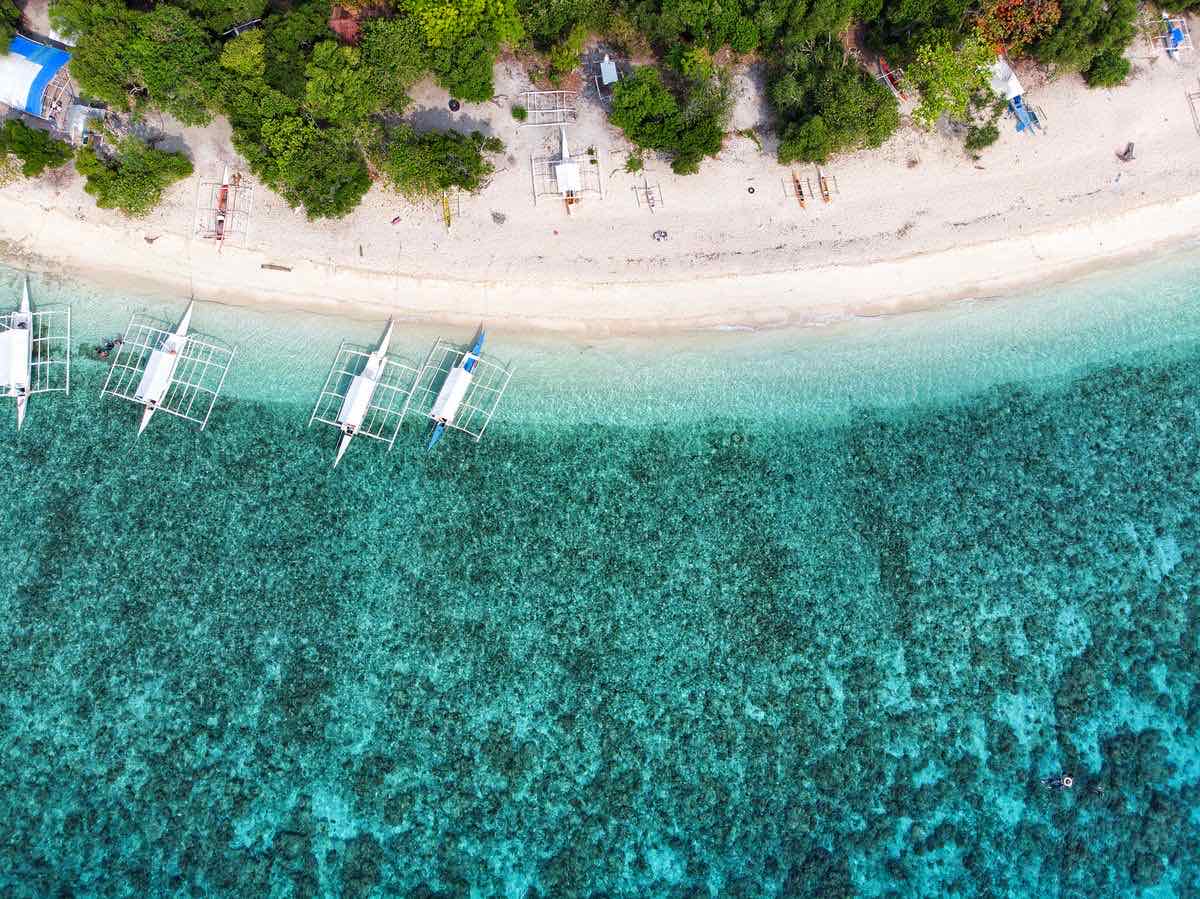
Panglao is the logical base for Bohol. The international airport sits on the island, and every inland site worth seeing falls inside a 75 kilometre radius, so the countryside circuit closes in a single day without backtracking.
The one decision that saves you a morning is the direction you run it in. Almost every organised tour leaves Panglao and hits the Chocolate Hills in the middle of the day, which is both the hottest and the busiest moment at the viewpoint.
The Bohol countryside circuit, hour by hour from Panglao
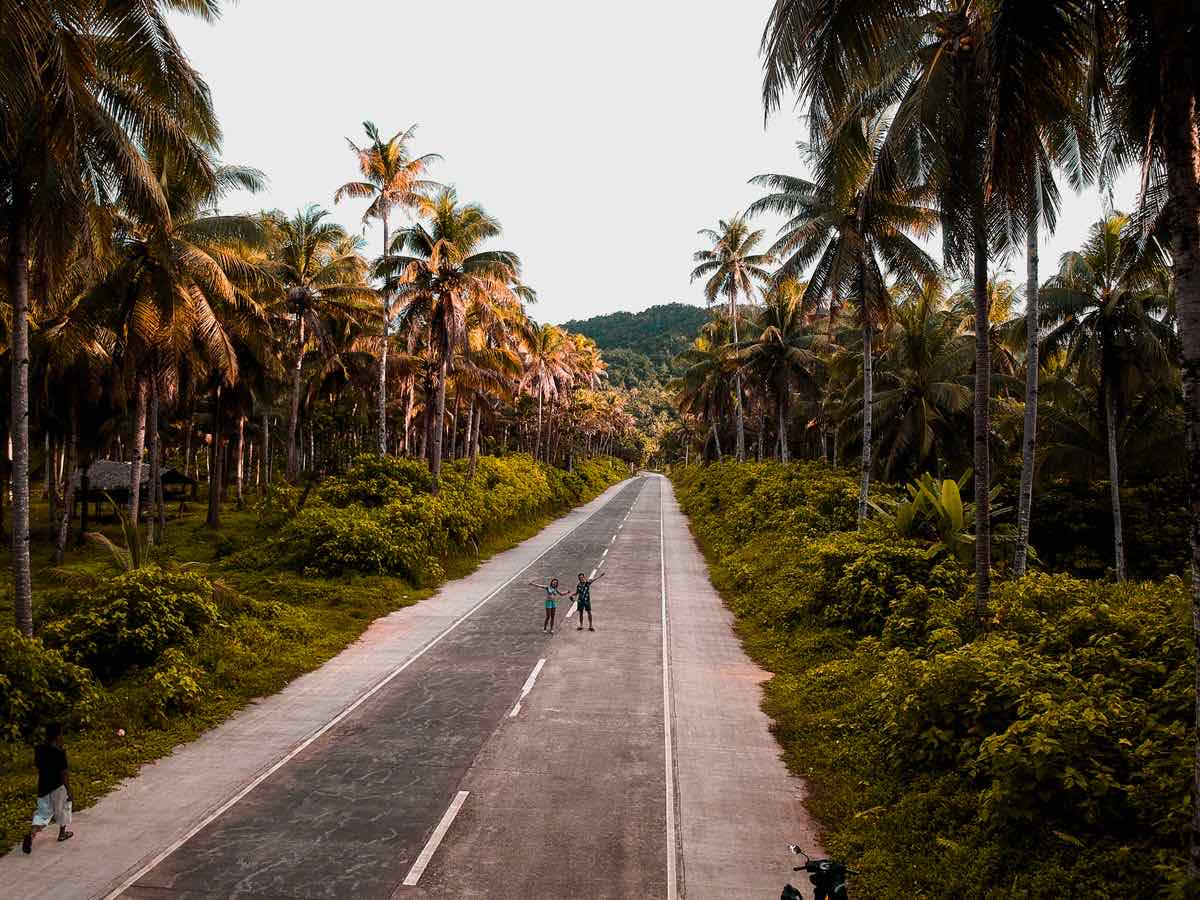
The full loop is about 150 kilometres out and back. It is a long day but not a rushed one, provided you do not spend the middle of it queueing.
The stop order that keeps you out of the queue
The standard tour order is Baclayon, then the tarsiers, then Loboc for lunch, then the Chocolate Hills in the early afternoon. That puts every visitor at the same place at the same time.
Reversed, the day runs Chocolate Hills, Man-Made Forest, Loboc, tarsiers, Baclayon, then back to the beach. Each stop lands at a quieter hour, and the tarsier sanctuary in particular is far better in the afternoon.
Real driving times between each site
Distances in Bohol are short but the roads are not fast. Budget on time, not on kilometres.
| Leg | Driving time |
|---|---|
| Panglao to Carmen (Chocolate Hills) | about 2 h |
| Carmen to the Man-Made Forest | about 30 min |
| Man-Made Forest to Loboc | about 20 min |
| Loboc to Corella (tarsiers) | about 40 min |
| Corella to Baclayon | about 20 min |
| Baclayon back to Panglao | about 40 min |
Why run the circuit backwards
Two effects stack in your favour. The Chocolate Hills viewpoint faces east across the mounds, so the early light does more for the landscape than midday sun, which flattens it.
And the tarsier sanctuary empties out after lunch, precisely when the animals are least disturbed. Doing it last is better for you and better for them.
Chocolate Hills: what time to climb the viewpoint

The hills are a field of more than a thousand near-identical mounds spread across the interior. The complex at Carmen is the standard viewpoint and the one every tour uses.
The 7:30 to 9:30 window
Arriving between 07:30 and 09:30 gives you the cool part of the morning and the light at a low enough angle to separate the mounds from each other. By 11:00 the coaches have arrived and the contrast has gone flat.
From Panglao that means leaving around 05:30. It is the single most useful early start on the island.
What you actually see from the Carmen complex
A staircase leads to a platform with a wide view over the field of mounds. It takes ten minutes to climb and most people spend twenty minutes at the top.
Set expectations on the colour. The hills only turn the brown that gives them their name at the end of the dry season, roughly February to May. The rest of the year they are green, which is beautiful but is not the postcard.
The Chocolate Hills are only brown at the end of the dry season, roughly February to May. Outside that window they are green, and no time of day will change that.
The Corella tarsier sanctuary and why it matters

There is more than one place in Bohol advertising tarsiers, and they are not equivalent. The distinction is worth ten minutes of your attention before you book anything.
A nocturnal primate that daylight exhausts
The Philippine tarsier is nocturnal and spends the day asleep, gripping a branch a metre or two off the ground. Noise, flash photography and handling cause it real stress, and stressed tarsiers in captivity have a documented history of self-harm.
That is the whole reason the rules at a proper sanctuary feel strict. They are not theatre.
Corella against the roadside pens
The Philippine Tarsier Foundation site at Corella keeps the animals in a large forested enclosure where they choose their own sleeping spots. A guide walks you along a path and points them out. You do not touch them and you do not use flash.
The roadside operations closer to Loboc let visitors hold the animals or photograph them at arm’s length. Cheaper, faster, and the reason the species is in trouble. Corella is the one to go to.
When to turn up
The sanctuary opens around 08:30 and last entry falls around 15:30, with closing near 16:00. Entrance was 150 PHP per person, with a reduced rate around 120 PHP for students, seniors and PWD.
No advance booking is needed. Come in the afternoon: the organised tours pass through in the morning and you will have the path close to yourself.
Loboc, the Man-Made Forest, Baclayon and Hinagdanan

These four fill the rest of the circuit and none of them needs more than an hour.
- The Loboc river cruise is a floating restaurant with a buffet and live music. It is touristy and it is also a pleasant hour on the water.
- The Man-Made Forest is a two kilometre corridor of mahogany planted in the 1960s. You stop, photograph the tunnel of trees, and move on.
- Baclayon church is one of the oldest stone churches in the country and was damaged in the 2013 earthquake. Restoration work has been running since.
- Hinagdanan cave, back on Panglao itself, is a small cavern with a swimmable pool. Worth it only if you have an hour left over.
If your day is running late, the Man-Made Forest is the one to cut. It is a photo stop rather than a visit.
Car with driver, scooter or organised tour: what it costs
Three ways to do the circuit, and the right one depends more on your appetite for driving than on the money.
- Car with driver for the day, the standard choice, and the one that lets you dictate the running order.
- Scooter, cheapest and the most flexible, but that is 150 kilometres in a day on shared roads.
- Organised group tour, the cheapest per head and the one that locks you into the crowded running order.
If you take only one thing from this page, it is that the organised tour costs you the early Chocolate Hills window. Hiring a car with a driver buys back that morning.
The Panglao beaches: Alona, Dumaluan and Doljo

The three main beaches are ten minutes apart and could not be more different in feel.
Alona Beach, everything on foot
Alona is the busy one, a short strip backed by dive shops, bars and restaurants. Everything you need is walkable and the boat operators leave from here.
It is also the noisiest and the most built up. If you want a base rather than a retreat, this is it.
Dumaluan Beach, the wide sand
Dumaluan is broader, quieter and better for actually lying on. Fewer places to eat, more room, and resorts rather than a strip.
Doljo Beach, the end of the island
Doljo sits at the western tip and is the quietest of the three. Little infrastructure, so you need transport to get anywhere, which is exactly why some people pick it.
The boat trip: Balicasag, Pontod and the dolphins
The standard Panglao boat day leaves before sunrise for the dolphins, then snorkels at Balicasag and stops at the Virgin Island sandbar. It runs about six hours.
Pricing is by boat rather than by head, so the per-person cost falls sharply with group size. Rates quoted for 2026 ran from around 4 090 PHP per person for two or three passengers down to about 2 670 PHP once you are ten or more.
Two honest caveats. The dolphin segment is a chase, with several boats converging on the same pod, and Balicasag gets congested enough that hiring snorkelling gear on the island can take a while. The reef itself is genuinely good.
Frequently asked questions
How many days do you need for Panglao and Bohol?
Three days is the comfortable minimum: one for the countryside circuit, one for the boat trip, one for the beach. Two works if you accept doing the circuit and the boat back to back.
Can you do the Bohol circuit by scooter?
Yes, and plenty of people do. It is roughly 150 kilometres round trip on roads shared with buses and trucks, so it suits confident riders rather than first-timers.
When are the Chocolate Hills actually brown?
At the end of the dry season, roughly February to May. Outside that window the mounds are green.
Where should you stay on Panglao?
Alona if you want restaurants and dive shops on foot, Dumaluan if you want space and quiet with resorts, Doljo if you want to be left alone and do not mind driving to dinner.
Do you need to book the Corella tarsier sanctuary?
No. Turn up during opening hours, pay at the gate, and take the guided path. Afternoons are quieter than mornings.
How do you get to Panglao from Cebu?
By ferry to Tagbilaran, then 30 to 40 minutes by road, which is the usual route. The crossing takes about two hours and the port you pick matters, as covered in our guide to the Cebu to Bohol ferry. There are also direct flights into Panglao airport.