
El Nido wins above the water, Coron wins below it. If you came for turquoise lagoons ringed by limestone cliffs and a small beach town with somewhere to eat at night, book El Nido. If you came to dive Japanese wrecks and swim in a lake held between two rock walls, book Coron.
With only one week, doing both costs you a full travel day plus a crossing that the weather can cancel. That is the real question on this page, and the answer depends on what you want out of the water rather than on which island is prettier.
Coron or El Nido: the decision table

Both sit in the same province and neither is a substitute for the other. Here is the short version before the detail.
| If you want | Book |
|---|---|
| Limestone cliffs, lagoons, a walkable beach town | El Nido |
| Wreck diving, a lake in a rock amphitheatre | Coron |
| Your first trip to the Philippines | El Nido |
| Fewer people on the same water | Coron |
| Somewhere to eat and drink after dark | El Nido |
| A dive log rather than a camera roll | Coron |
Two landscapes that have little in common
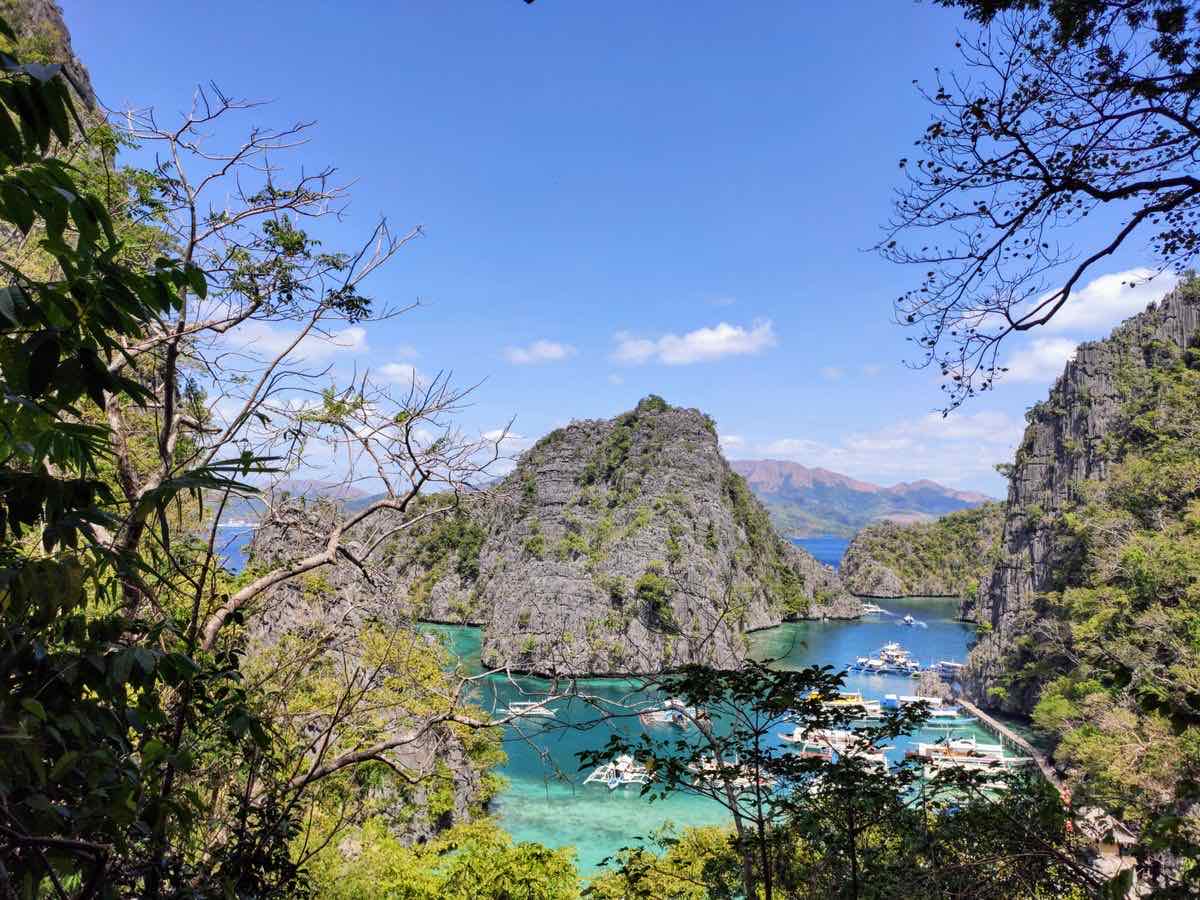
El Nido faces the Bacuit archipelago, a wall of karst towers rising straight out of shallow turquoise water. The lagoons are the attraction, and you enter most of them by kayak or by swimming off the boat.
Coron is the opposite geometry. The rock is still there but the interest sits underneath, in a bay full of Japanese ships sunk in 1944 and in freshwater lakes that open behind a short climb over a ridge.
Diving settles it faster than anything else
If you are certified and you want wrecks, the discussion ends here. Coron holds one of the most accessible wreck clusters in Asia, with several ships in recreational depth range.
El Nido has pleasant reef diving and nothing that would justify the trip on its own. Divers who go there generally do it as snorkelling with a tank, not as a dive destination.
Several of the Coron wrecks sit within recreational limits, so an Advanced certification opens most of the bay. Technical training is only needed for the deepest hulls, not for the classic circuit.
Crowds, accommodation and evenings
El Nido town is small, dense and busy, with the widest choice of places to sleep and eat in the region. It is also where you will queue, both on the water and at the pier.
Coron town is more ordinary and less pretty, but the boats spread out over a much larger bay. You get more water to yourself and fewer options at dinner. That trade is the honest summary of the two towns.
What a day on the water costs on each side

The headline tour price is only part of what you pay. On both sides, the fees collected separately can add a third to the day.
The four El Nido tours and what they cost
El Nido standardised its island hopping into four lettered routes, A, B, C and D. Shared group tours were quoted between 1 200 and 1 400 PHP per person with lunch in August 2026, with some operators up to 1 800 depending on the route.
Two things catch people out. Combination tours are no longer permitted, so you cannot do half of A and half of C in a day. And several stops carry their own fee on top, notably the Big Lagoon at around 200 PHP plus roughly 150 PHP for the kayak you need to get in.
- Tour price, 1 200 to 1 800 PHP shared, lunch usually included.
- Environmental fee, quoted between 200 and 400 PHP depending on the operator, valid across several days on one receipt.
- Per-lagoon entry, around 200 PHP where it applies.
Keep the environmental fee receipt. It covers a window of several days and no operator will refund you for buying it twice.
Coron tours and the Tagbanua entrance fees
Coron group tours were quoted between 1 500 and 2 000 PHP per person in August 2026, with a private boat for four to six people landing between 5 000 and 8 000 PHP. Lunch and snorkelling gear are normally included.
The entrance fees here are not a municipal tax. Coron Island belongs to the Tagbanua, who opened Kayangan Lake to visitors in 2001 under their own rules, and the fees go to the tribal association. Kayangan was at 300 PHP per person.
Getting to El Nido and Coron
Neither is a place you reach casually, and the access routes are one of the reasons people end up choosing one over the other.
Reaching El Nido
El Nido has its own small airport at Lio, served by a limited number of flights, and it is expensive. The common alternative is to fly into Puerto Princesa and take the van north, which runs five to six hours on a road that has improved but is still long.
Budget a travel day either side if you go through Puerto Princesa. It is the single biggest hidden cost of an El Nido week.
Reaching Coron
Coron is served by Busuanga airport, and the access constraint here is specific. There is no direct jet service from Manila, because the Busuanga runway does not take jets and Manila restricted turboprop movements in March 2026.
In practice you come in via a turboprop from another hub or by sea. Check the routing before you assume a same-day connection works.
The season that changes the answer
From roughly June to November the Bacuit archipelago takes more weather, and El Nido tour days get cancelled or trimmed. Coron is not immune but sits slightly better in that window.
If your dates fall in the wet half of the year and you only have a few days on the water, that alone is an argument for Coron.
Should you do both in one week?

You can. Whether you should depends on how many days you actually have on the ground once flights are deducted.
The ferry between El Nido and Coron
Fast craft link the two in roughly 3 h 30 to 5 h depending on the operator and the sea state. It is a real crossing on open water, not a hop, and it is suspended when conditions deteriorate.
Several operators run the route, so a cancellation is usually a delay rather than a dead end. It is still a day you have to build into the plan rather than assume.
When doing both ruins the trip
With seven days on the ground, splitting them means roughly three days each side plus a crossing. That is enough for the headline tour in each place and nothing else.
- If you dive, doing both leaves too little time for the Coron wrecks to be worth the trip.
- If the weather turns, a cancelled crossing eats the shorter of your two stays.
- If you are travelling with children, the transfer days are the ones that hurt.
Our recommendation by traveller profile
First trip to the Philippines, one week, not a diver: El Nido, and stay put. The lagoons are what you came for and three tour days do not repeat themselves.
Certified diver: Coron, and give it four days minimum. The wrecks are the reason to fly to this province at all.
Two weeks or more: do both, in that order, El Nido then Coron, with the ferry in the middle and a spare day on the Coron side for weather.
Frequently asked questions
Is El Nido better for a first trip to the Philippines?
Generally yes. The landscape is the postcard people have in mind, the town is easy to navigate on foot, and the four tour routes give you a full programme without needing a certification.
How many days do you need in El Nido?
Three full days on the ground covers two or three tour routes with a margin for one weather day. Two days works only if both are clear.
Is the El Nido to Coron ferry reliable?
It runs daily in normal conditions and is suspended when the sea state requires it. Several operators serve the route, so delays are more common than outright dead ends.
Can you dive the Coron wrecks without technical certification?
Yes for a good part of the circuit. Several hulls sit within recreational depths, and an Advanced certification opens most of the classic sites. The deepest wrecks are the ones that need technical training.
What daily budget should you allow in Palawan?
The tour is the dominant line at 1 200 to 2 000 PHP, before entrance fees of 200 to 300 PHP per site. Add accommodation and food and a comfortable day sits well above what the same money buys you in the Visayas.
When is the best time for Coron and El Nido?
The drier window from roughly December to May gives the most reliable tour days. June to November brings more cancellations, more so on the El Nido side.
Should you book tours in advance?
In high season, book the day before rather than weeks ahead. Operators sell from town and the useful decision is which route to take given the morning forecast, which you cannot know a month out.