
The right month for the Philippines depends on the island, not on the country. PAGASA, the national weather agency, splits the archipelago into four climate types, and they do not share a calendar: December is the driest month in Palawan and the wettest in Siargao.
The “dry season from December to April” that every guide repeats describes Type I only, which covers Palawan and the west of Luzon. Apply it to Siargao or Samar and you book your trip into the rain.
Selector
Which month for which island?
Based on the four climate types defined by PAGASA, the national weather agency. The climate type beats the tourist calendar: December is the worst month in Siargao and the best in Palawan.
Why the December to April dry season only covers half the country

The Philippines sits between two monsoons. The southwest monsoon, the habagat, brings rain from roughly June to October and hits the western side of the country. The northeast monsoon, the amihan, blows from November to February and hits the eastern side.
That geography is the whole explanation. An island exposed to the west and an island exposed to the east receive their rain six months apart, and no national rule can hold for both.
December is the driest month in El Nido and the wettest in Siargao. The two islands are in the same country, 700 kilometres apart, and on opposite monsoon calendars.
The four PAGASA climate types
PAGASA classifies every part of the country into one of four types. Knowing which type your destination falls into replaces every general seasonal rule you will read elsewhere.
| Type | What it means for your dates |
|---|---|
| Type I | Marked dry season November to April, wet summer |
| Type II | No dry season, rainfall peaks December to February |
| Type III | No marked peak, short dry season of one to three months |
| Type IV | Rain spread across the year, no dry season at all |
The selector at the top of this page works both ways. Pick a destination to get its window, or pick a month to see which destinations are in season.
Type I: El Nido, Coron and Palawan, the only real dry season

Type I is the only part of the country with a dry season worth the name. It covers Palawan, Manila and the western side of Luzon, and it is where the standard advice actually applies.
December to April is genuinely dry here, and July to September is genuinely wet. That is also why Palawan prices peak in exactly the months the rest of the country is unremarkable.
The practical consequence: if Palawan is the reason for your trip, the dates are not negotiable, as our comparison of Coron and El Nido sets out. Book the dry window and accept the high season crowd, or accept cancelled boat days.
Types III and IV: Cebu, Boracay, Bohol and Camiguin
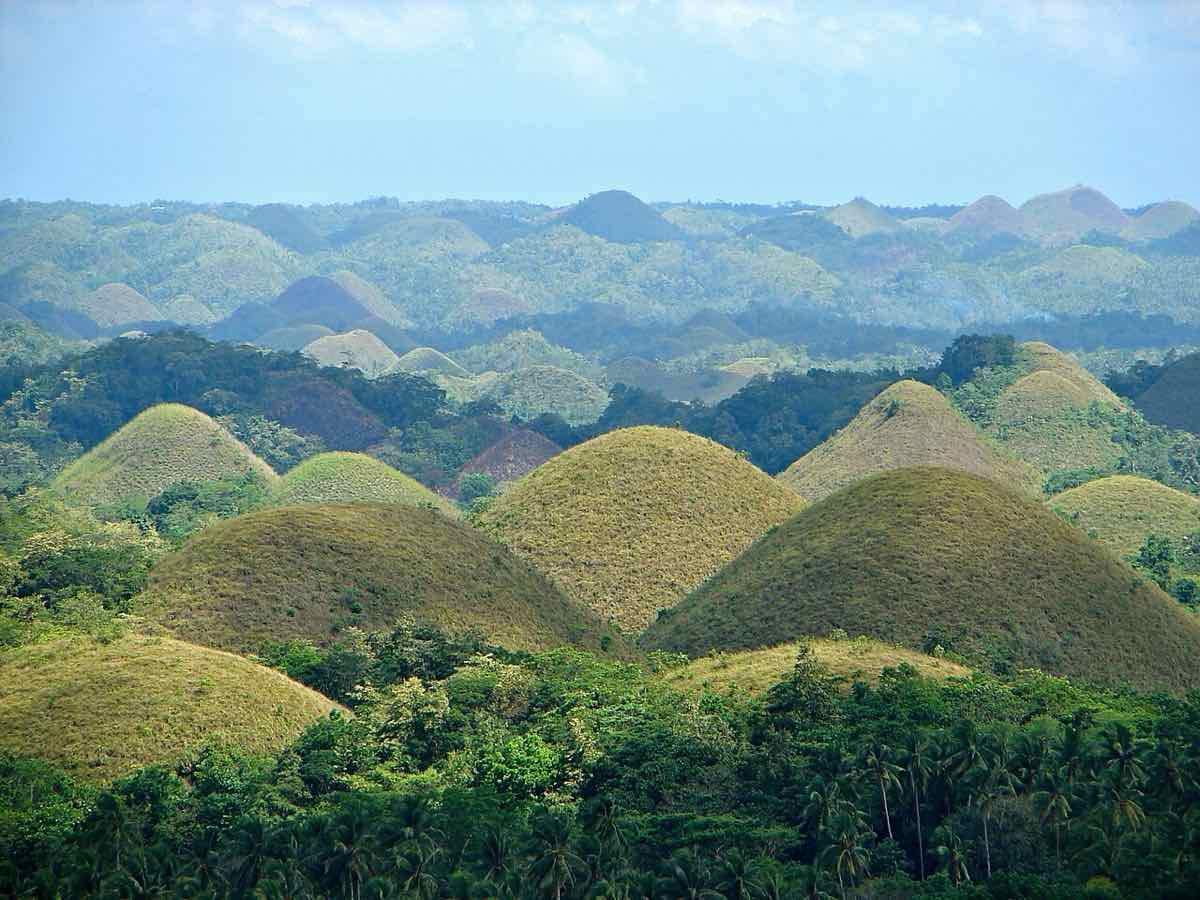
The central Visayas are the forgiving part of the country. Type III has a short dry season and Type IV has none at all, but neither has a month that is genuinely written off.
In practice, Cebu, Bohol, Negros and Camiguin are workable all year. March to June is drier and calmer at sea, which matters more for boat days than for beach days.
- Cebu and Moalboal, best March to June, no month lost.
- Bohol and Panglao, workable year round, March to May marginally drier.
- Boracay, a longer window from November to May, never guaranteed.
- Camiguin and Donsol, February to May, which is also the whale shark season at Donsol.
If your dates are fixed by work or school holidays and you cannot move them, this is the region to point the trip at. It absorbs a bad month better than anywhere else.
Type II: Siargao, Samar and Batanes, where December is the worst month

Type II is the trap. These are the eastern-facing islands, and their rainfall peak falls in December, January and February, exactly when the rest of the country is at its best.
Siargao is the one that catches people out, because it is on every December itinerary. March to June is its real window for anything other than surfing.
Surfers are the exception, and it is worth stating plainly. The swell season at Siargao runs roughly September to November, which is also the wetter, rougher half of the year. Good waves and good weather do not coincide there.
Typhoons: where the risk is real and where it is not
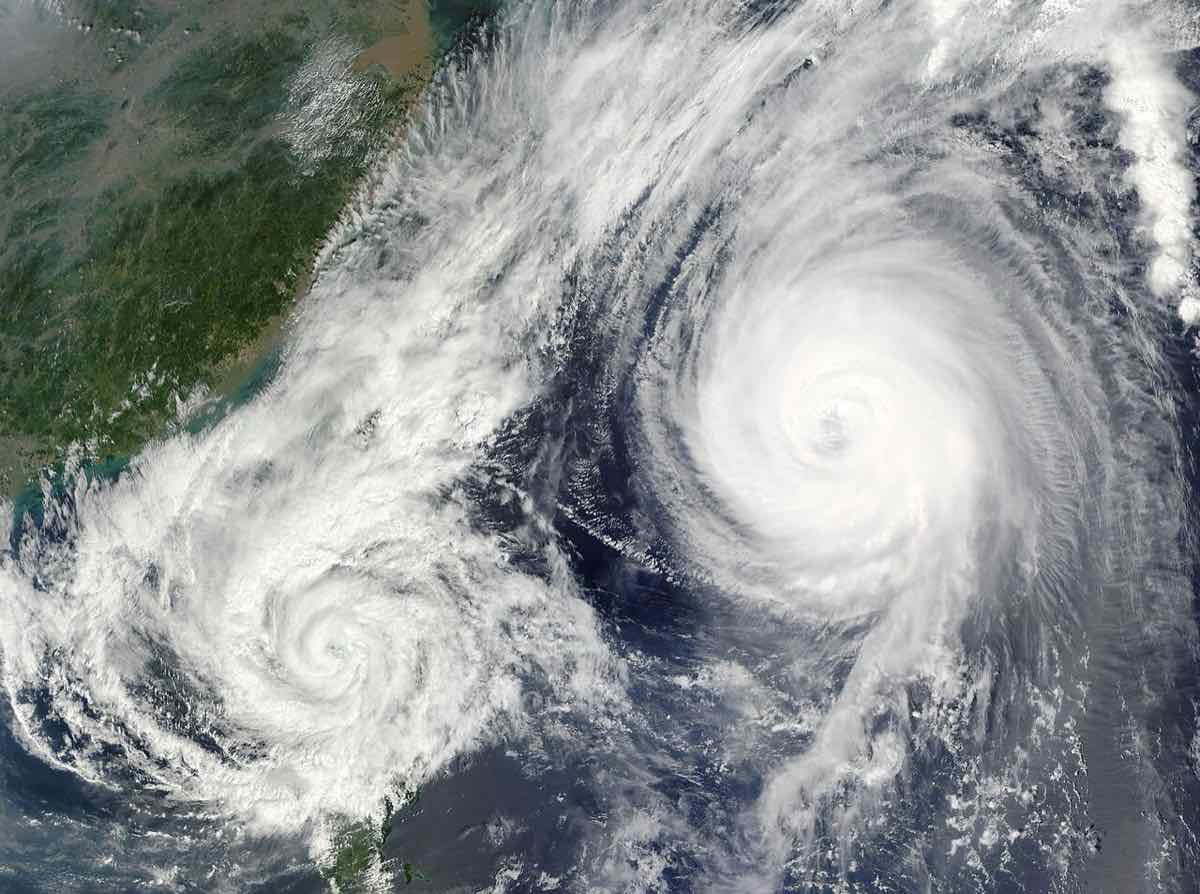
The country averages around twenty tropical cyclones a year, which sounds like a reason to stay home until you look at where they land.
The tracks concentrate on northern Luzon, Bicol and the eastern seaboard, mostly between July and October. Palawan sits largely outside the corridor, and the southern Visayas and Mindanao are hit far less often than the north.
- Highest exposure: northern Luzon, Bicol, Samar, from July to October.
- Moderate: central Visayas, with occasional severe events.
- Lowest: Palawan and the south, which sit off the main tracks.
The realistic risk for a traveller is not being caught in a storm. It is losing two days to suspended ferries and cancelled boat tours, which is why a spare day in the plan is worth more than a change of dates.
Which month to pick by traveller profile
The four types produce a fairly simple set of answers once you know what you came for.
- Palawan lagoons: December to April, and book early.
- Diving the Visayas: March to June, when the sea is calmest, as covered in our guide to diving in the Philippines.
- Surfing Siargao: September to November, and accept the weather.
- One trip, no fixed interest: February or March, the best national compromise.
- Whale sharks at Donsol: February to May.
February and March are the two months where the largest number of destinations are simultaneously in their window. If you have a free choice and no single obsession, that is where to point.
Frequently asked questions
What is the best month to visit the Philippines?
February or March if you want the widest choice of destinations in season at once. There is no single best month for the whole country, because the four climate types do not share a calendar.
Is December a good time to go?
For Palawan, Boracay and Manila, yes, it is close to the best. For Siargao, Samar and Batanes it is the worst month of the year, and it is also the most expensive fortnight nationally.
When is typhoon season in the Philippines?
Broadly July to October, concentrated on northern Luzon, Bicol and the eastern seaboard. Palawan and the south sit largely outside the main tracks.
Can you visit during the rainy season?
Yes, particularly in the central Visayas, where rain tends to come as heavy showers rather than all-day weather. Build a spare day into the plan for suspended boats and you will rarely lose more than that.
When are the Chocolate Hills brown?
At the end of the dry season, roughly February to May. Bohol is Type IV, so the change is driven by the accumulated dry weeks rather than by a true dry season.
Which month should surfers pick for Siargao?
September to November for the swell. That window overlaps the wetter half of the year, so surf conditions and beach weather pull in opposite directions on this island.
Do prices change with the season?
Sharply, and the peak is not the same everywhere. Palawan and Boracay run high from December to April, while the national demand spike falls at Christmas, New Year and Holy Week regardless of destination.